

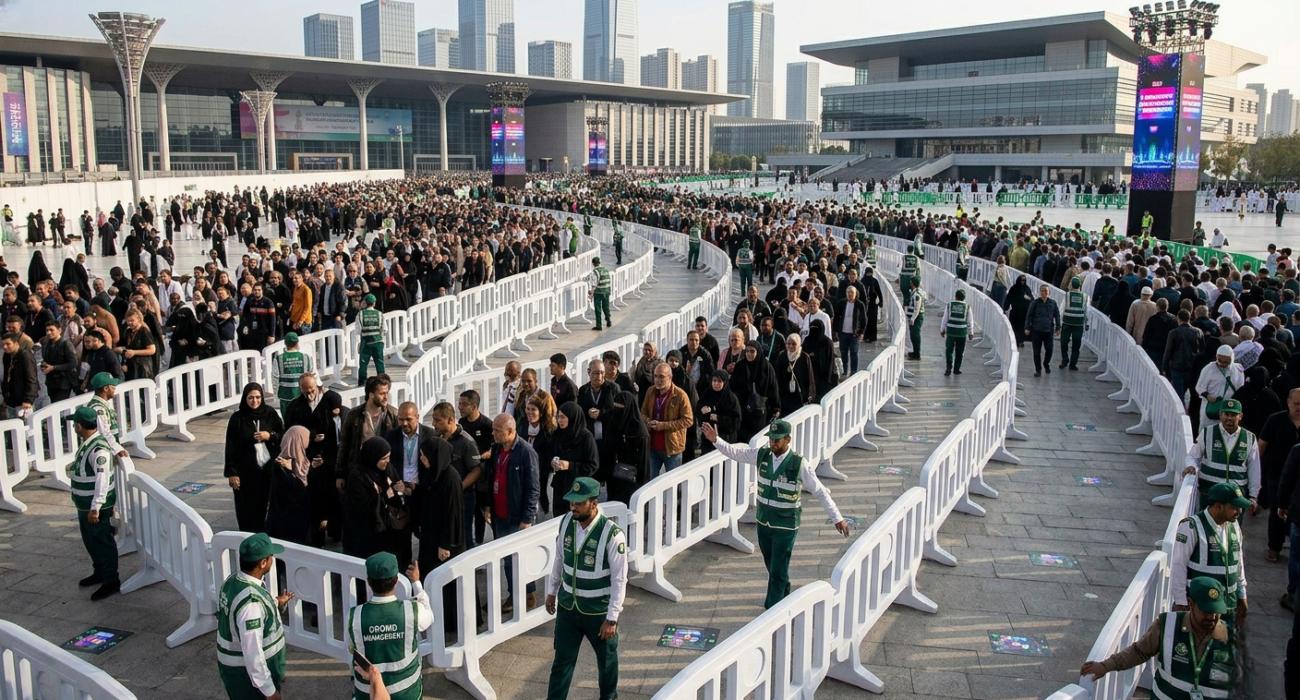
Organizing large events, whether they are international conferences, exhibitions, or cultural festivals, requires meticulous planning and strategic oversight. One of the most critical elements of successful event planning is crowd management. This process involves anticipating attendee behavior, ensuring safety, and providing a seamless experience for every participant. Companies like AAC in Saudi Arabia exemplify professional standards in crowd management, combining local expertise with global best practices.
Understanding Crowd Management
Crowd management refers to the systematic planning and execution of strategies to control the movement, behavior, and safety of large groups of people during an event. Unlike traditional crowd control, which primarily focuses on restricting movement or mitigating immediate threats, effective crowd management is proactive, comprehensive, and strategic. It considers not only safety but also attendee satisfaction, operational efficiency, and the overall flow of an event.
Proper crowd management ensures:
- Safety: Minimizing risks of accidents, injuries, and overcrowding.
- Efficiency: Optimizing registration, access, and movement within the event space.
- Guest Experience: Providing a comfortable, organized, and professional environment.
- Professional Reputation: Enhancing trust with clients, sponsors, and participants.
Principles of Effective Crowd Management
To manage crowds effectively at large-scale events, several core principles should be applied.
Risk Assessment and Planning
Every successful event begins with a comprehensive risk assessment. This includes evaluating:
- Venue capacity and layout.
- Number of expected attendees.
- Locations of emergency exits and access points.
- Potential bottlenecks and high-traffic areas.
Early identification of potential hazards allows organizers to implement proactive solutions, such as redistributing staff, redesigning flow paths, or providing additional support services.
Strategic Movement Planning
Organizers must design clear pathways for entering, exiting, and moving within the venue. This includes:
- Segregated entry and exit points to reduce congestion.
- Clearly marked and accessible registration areas.
- Smooth traffic flow between sessions, stages, or exhibition halls.
Strategically planned pathways are vital for maintaining safety and ensuring a positive attendee experience.
Training and Empowering Staff
Professional personnel are essential for executing crowd management effectively. Staff must be trained to:
- Direct attendees safely and efficiently.
- Handle emergencies calmly and professionally.
- Provide hospitality and customer service that enhances attendee satisfaction.
For example, AAC emphasizes empowering Saudi nationals through advanced training programs, ensuring their teams meet international standards while maintaining local cultural sensitivity.
Use of Technology
Technology has become an indispensable tool in modern crowd management. Event organizers can leverage:
- CCTV systems and surveillance cameras for real-time monitoring.
- Mobile apps to guide attendees and provide event updates.
- Analytics software to identify congestion points and adjust staff deployment.
Integrating these tools allows for real-time decision-making, preventing potential issues before they escalate.
AAC’s Approach to Crowd Management
AAC provides a practical model of professional crowd management. Their approach combines training, logistics, and technology to create safe and organized events. Key services include:
- Guest Guides and Reception Staff: Trained personnel assist visitors, answer queries, and ensure smooth movement throughout the venue.
- Traffic Coordination: Staff manage both pedestrian and vehicular flow efficiently.
- Registration and Badge Services: Streamlined registration processes reduce wait times and enhance attendee experience.
- Hospitality Services: Personalized attention, including accommodation coordination and airport reception, adds a high level of service.
Through events such as the Islamic Arts Biennale and the Islamic Military Counter Terrorism Coalition (IMCTC) conferences, AAC demonstrates excellence in combining crowd management with superior hospitality and operational efficiency.
Professional Methods in Crowd Management
Pathway Design and Flow Control
Pathway design is a critical aspect of crowd management. Organizers must plan entrance, exit, and movement routes carefully to prevent congestion. Strategies include:
- Clear signage and maps to guide attendees.
- Physical barriers to channel flow without creating bottlenecks.
- Designated areas for waiting, registration, or information.
Proper flow control enhances safety and reduces stress for attendees.
Specialized Staff Deployment
Staff members are strategically placed throughout the venue to monitor movement, provide guidance, and respond to emergencies. Trained personnel help prevent overcrowding and ensure attendees follow the designated pathways. AAC’s approach emphasizes proactive staff deployment, with personnel trained to anticipate issues before they arise.
Guest Experience Enhancement
Crowd management is not only about safety—it also enhances the attendee experience. Personalized services, such as guided tours, hospitality coordination, and transport support, create a professional and welcoming environment. AAC, for instance, ensures guests are assisted at every step, from hotel check-ins to transportation within the event.
Technological Integration
Modern crowd management relies heavily on technology. CCTV monitoring, live data analytics, and mobile navigation apps allow organizers to:
- Track crowd density in real-time.
- Anticipate congestion and deploy additional resources.
- Communicate effectively with attendees about movement and schedule updates.
Continuous Monitoring and Evaluation
Even with a solid plan, crowd behavior can be unpredictable. Continuous monitoring enables staff to make real-time adjustments, whether it’s opening additional access points, redirecting traffic, or reallocating staff. This dynamic approach ensures both safety and a smooth experience for attendees.
International Standards in Crowd Management
Event organizers should follow recognized international guidelines to ensure safe and efficient crowd management:
- ISO 20121: Sustainable event management standards covering safety, accessibility, and operational efficiency.
- NFPA 101: Fire safety and emergency protocols to safeguard attendees.
- Occupational Health and Safety Guidelines: Ensuring staff and participant safety.
Compliance with these standards helps maintain a professional image and provides confidence to clients and attendees alike.
Practical Applications
Crowd management strategies are applied across various types of events:
- Exhibitions and Trade Shows: Smooth visitor flow ensures access to booths and prevents congestion.
- Conferences: Efficient registration and room transitions enhance the attendee experience.
- Festivals and Sports Events: Managing dense crowds while providing safety and comfort requires specialized planning and coordination.
AAC’s work demonstrates how these strategies can be applied successfully in high-profile events, balancing safety, efficiency, and guest satisfaction.
Challenges in Crowd Management
Large events face multiple challenges in managing attendees:
- Sudden surges of attendees: Addressed by real-time monitoring and flexible staffing.
- Non-compliant behavior: Managed through clear signage, staff guidance, and communication.
- Emergencies: Evacuation protocols and trained response teams reduce risks.
Proactive planning and professional execution are key to overcoming these challenges.
Conclusion
Effective crowd management is essential for the success of any large-scale event. By combining planning, trained personnel, technology, and hospitality, organizers can ensure the safety and satisfaction of attendees. Companies like AAC set a benchmark for excellence, demonstrating how strategic planning, international standards, and attention to guest experience can create successful, memorable events.
With the right methods and professional standards, managing large crowds becomes not only a safety measure but also a tool for enhancing operational efficiency and attendee satisfaction. Properly executed, crowd management ensures events run smoothly, safely, and professionally, leaving a lasting positive impression on every participant.